Beyond Hot Flashes: 5 Surprising Truths to Help You Master Your Menopause Transition
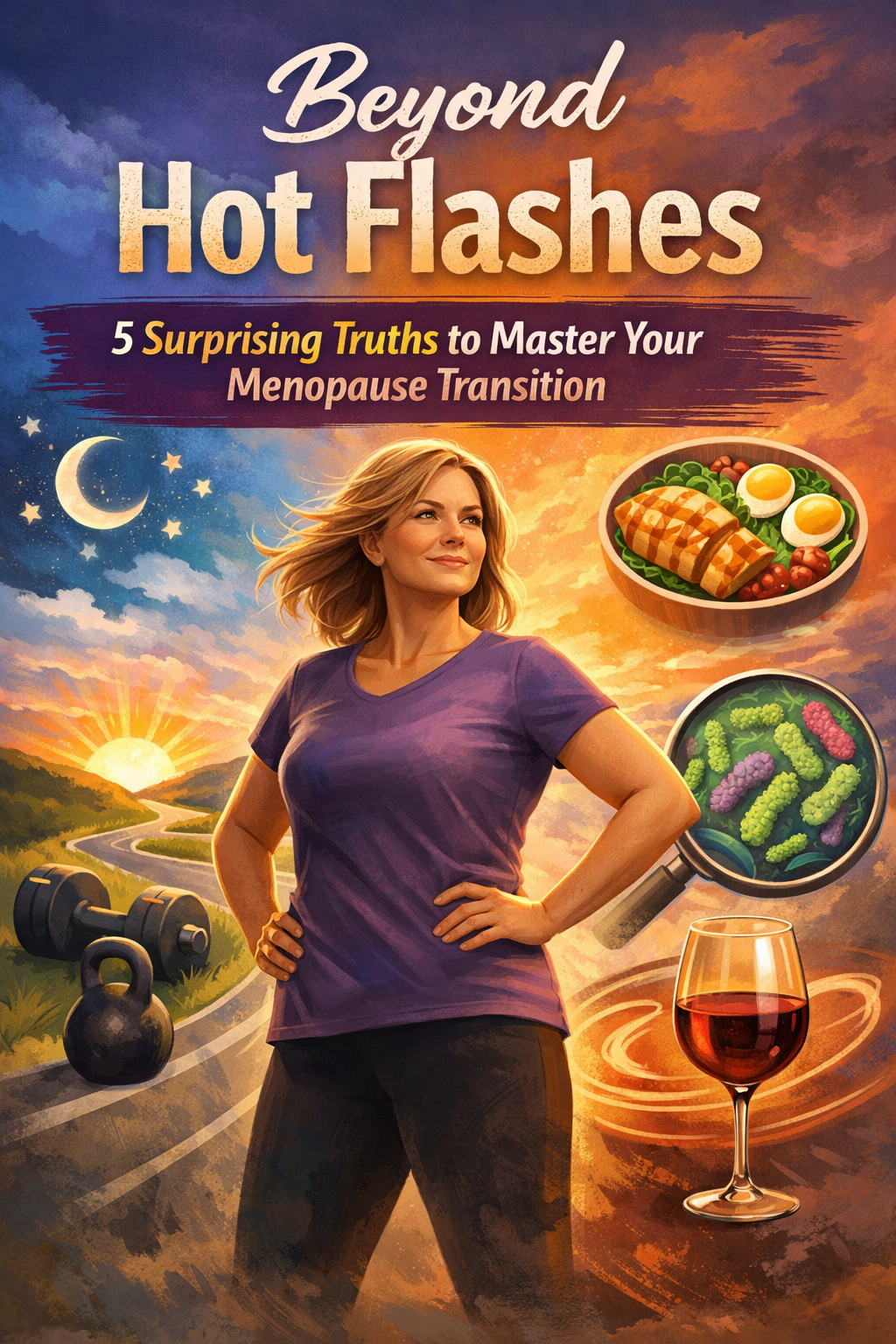
For many women navigating perimenopause and menopause, it can feel like "the wheels fall off the bus." One day, you feel in control, and the next, it seems like "suddenly nothing is working right." You might have been prepared for the occasional hot flash, but the reality of this transition is often far more complex. A cascade of systemic changes that can impact everything from your metabolism and strength to your mood and sleep.
While this journey can feel overwhelming, understanding the specific biological shifts happening inside your body is the first step toward regaining control. What you'll discover is that these five areas are not separate issues; they are deeply intertwined. How you sleep affects your cravings, what you eat impacts your hormones, and how you move protects your future. These are the powerful, targeted levers you can pull to not just survive, but thrive, during this new chapter.
1. Your Late-Night Cravings Aren't a Willpower Problem; They're a Protein Problem.
If you find yourself raiding the pantry at 9 p.m., it's easy to blame a lack of willpower. But according to the Protein Leverage Hypothesis, this powerful drive for food is actually a biological signal.
Your body is hardwired to seek out the protein it needs for essential functions, including maintaining muscle mass, which becomes critically important during menopause. If you don't consume enough protein throughout the day, aiming for at least 100 grams total, with 30-50 grams per meal, your body will drive you to keep eating later in the day to make up for the deficit. This isn't just about calories; it's about preserving your metabolic engine. As estrogen declines, the body's ability to synthesize muscle protein is reduced, making every gram of protein you consume that much more critical for staving off age-related muscle loss (sarcopenia).
The problem is that this late-night signal isn't for a healthy meal. It’s a powerful craving for hyperpalatable, high-calorie foods that can worsen metabolic issues.
"Your body is looking to make up the calories that you did not consume. And it's not from chicken and broccoli. It's going to be chips, it's going to be ice cream, it's going to be junk that you don't want to be consuming."
Reframing these cravings as a biological request for more protein—not a personal failing—is an empowering mental shift. Prioritize protein at every meal, and you may find those late-night cravings simply disappear.
2. You Lose Strength Before You Lose Muscle.
One of the most critical and counter-intuitive facts about muscle health in midlife is this: the decline in your ability to perform tasks happens before the actual, measurable loss of muscle tissue (sarcopenia) sets in.
This initial loss of strength is a crucial early warning sign. You might notice it in subtle ways that are easy to dismiss. Suddenly, you can’t open a stubborn pickle jar, it’s a struggle to lift your luggage into the overhead compartment on a plane, or you feel fatigued carrying groceries up the stairs.
These aren't just minor annoyances; they are clear indicators that the process of muscle decline has begun. Recognizing this early gives you a powerful opportunity to intervene. This is your body’s signal to make resistance training a non-negotiable part of your routine to counteract the process and preserve your strength and independence for years to come.
3. There's a Therapy for Insomnia That's as Effective as Sleeping Pills—Without the Side Effects.
Chronic insomnia is one of the most disruptive symptoms of menopause, leaving millions of women exhausted and frustrated. While medication can seem like the only option, a powerful, evidence-based alternative exists: Cognitive Behavioral Therapy for Insomnia (CBT-i).
CBT-i is a well-researched modality that doesn't just mask the problem; it helps you learn how to support and promote your body's own natural sleep mechanism. It addresses the thoughts and behaviors that disrupt sleep, giving you long-term skills for a restful night. Best of all, research shows it is just as effective as medication.
"CBT-i produces results that are equivalent to sleep medication, with no side effects, fewer episodes of relapse, and a tendency for sleep to continue to improve long past the end of treatment."
For the 40-56% of menopausal women who report sleep issues, knowing that there is a powerful, drug-free tool to reclaim restorative sleep is a game-changer for both physical and mental well-being. And this improved sleep doesn't just boost your energy; it also plays a crucial role in regulating the very hormones we'll discuss next.
4. Your Gut Health Directly Manages Your Estrogen Levels.
While we often think of hormones being managed by our ovaries and endocrine system, your gut plays a surprisingly direct role. A specific community of bacteria within your gut microbiome, known as the "Estrobolome," is responsible for modulating and processing estrogen.
This community produces a key enzyme (β-glucuronidase) that helps decide the fate of estrogen in your body. A healthy gut microbiome keeps this process in balance, ensuring excess estrogen is properly eliminated. When the estrobolome is unhealthy, this process can go awry, contributing to the hormonal imbalances that drive symptoms.
You can directly support your estrobolome through your diet. The key is providing the right fuel for these critical gut bacteria. Actionable strategies include aiming for 25-30 grams of fiber per day and incorporating a wide diversity of plant foods—the goal is to eat from 30 different plant varieties each week to nourish a robust and effective microbiome. Nourishing this internal ecosystem is vital, but it's equally important to understand what actively disrupts it—which brings us to that common nightly habit.
5. That Nightly Glass of Wine Is More Than Just a Sleep Disruptor.
Many women know that alcohol can worsen hot flashes and fragment sleep, but its impact goes much deeper, acting as a direct hormonal disruptor.
During the menopausal transition, when hormonal balance is already in flux, alcohol actively "increases estrogen levels by promoting the aromatization and interfering with estrogen’s metabolism and clearance in the blood." In short, it disrupts the very hormonal balance you are trying to stabilize.
This information isn't about judgment; it's about empowerment. Understanding this direct hormonal link allows you to make a fully informed choice about your habits. It prompts the crucial question every woman in this transition should ask herself: "Is alcohol no longer serving you?"
Taking Back the Reins
The menopausal transition is a complex and challenging biological process. However, understanding these specific mechanisms provides you with powerful, targeted lifestyle levers you can pull to feel better.
By focusing on protein intake, prioritizing strength, exploring drug-free sleep solutions, nurturing your gut health, and understanding alcohol's true impact, you create a clear road map for improving your quality of life. This knowledge transforms you from a passenger into the driver of your own health journey.
Now that you know where the real levers are, which one will you pull first?
